ACLE Seminar: Prof. Georg W Ringe (University of Hamburg and ECGI)
'Investor-led Sustainability in Corporate Governance'
Event details from: ACLE Seminar: Prof. Georg W Ringe (University of Hamburg and ECGI)
- Date
- 22 February 2022
- Time
- 12:30 – 13:45
Abstract
The transition to a sustainable economy currently involves a fundamental transformation of our capital markets. Lawmakers, in an attempt to overcome this challenge, frequently seek to prescribe and regulate how firms may address environmental, social, and governance (ESG) concerns by formulating conduct standards. Deviating from this conceptual starting point, the present paper makes the case for another path towards achieving greater sustainability in capital markets, namely through the empowerment of investors.
This trust in the market itself is grounded in various recent developments both on the supply side and the demand side of financial markets, and also in the increasing tendency of institutional investors to engage in common ownership. The need to build coalitions among different types of asset managers or institutional investors, and to convince fellow investors of a given initiative, can then act as an in-built filter helping to overcome the pursuit of idiosyncratic motives and supporting only those campaigns that are seconded by a majority of investors. In particular, institutionalized investor platforms have emerged over recent years as a force for investor empowerment, serving to coordinate investor campaigns and to share the costs of engagement.
ESG engagement has the potential to become a very powerful driver towards a more sustainability-oriented future. Indeed, I show that investor-led sustainability has many advantages compared to a more prescriptive, regulatory approach where legislatures are in the driver’s seat. For example, a focus on investor-led priorities would follow a more flexible and dynamic pattern rather than complying with inflexible pre-defined criteria. Moreover, investor-promoted assessments are not likely to impair welfare creation in the same way as ill-defined legal standards; they will also not trigger regulatory arbitrage and would avoid deadlock situations in corporate decision-making. Any regulatory activity should then be limited to a facilitative and supportive role.
Paper
Paper can be found here: https://papers.ssrn.com/sol3/papers.cfm?abstract_id=3958960.
Practicalities
This event will be a hybrid event. (Note: Subject to change due to COVID-19 government or UvA measures). For online attendance, please register via the relevant button below. The Zoom link will be specified in the registration confirmation email upon registration for the event.
If you would like to attend the seminar in person on Roeterseiland campus, please register via the relevant button below. Room information will be indicated by email upon registration. In-person places will be limited, cannot be guaranteed and will be allocated on a first-come-first-served basis.
About the Speaker
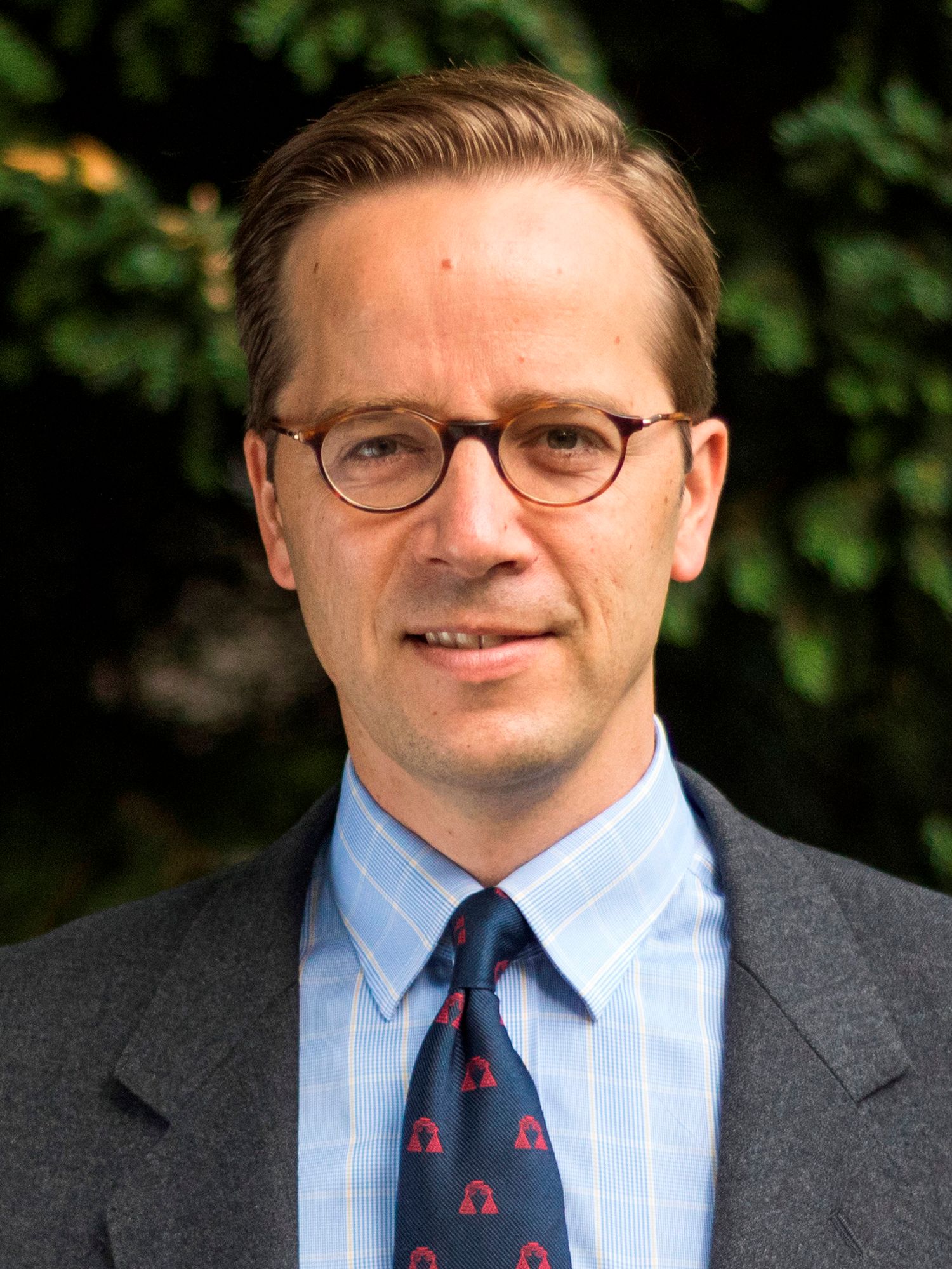
Professor Georg Ringe is Director of the Institute of Law & Economics at the University of Hamburg and Visiting Professor at the University of Oxford, Faculty of Law. His research focuses on questions of corporate law, capital markets, and financial regulation, from an interdisciplinary and comparative perspective. He is a Research Member with the European Corporate Governance Institute, Brussels, Fellow at the European Banking Institute, Frankfurt, and co-editor of the Journal of Financial Regulation. As Visiting Professor, he regularly teaches at leading academic institutions in North America, Europe, and Asia.
About the ACLE
The Amsterdam Center for Law and Economics (ACLE) is a joint initiative of the Faculty of Economics and Business and the Faculty of Law at the University of Amsterdam. The objective of the ACLE is to promote high-quality interdisciplinary research at the intersection between law and economics.

We gratefully acknowledge the generous funding by the Amsterdam University Fund for this seminar.